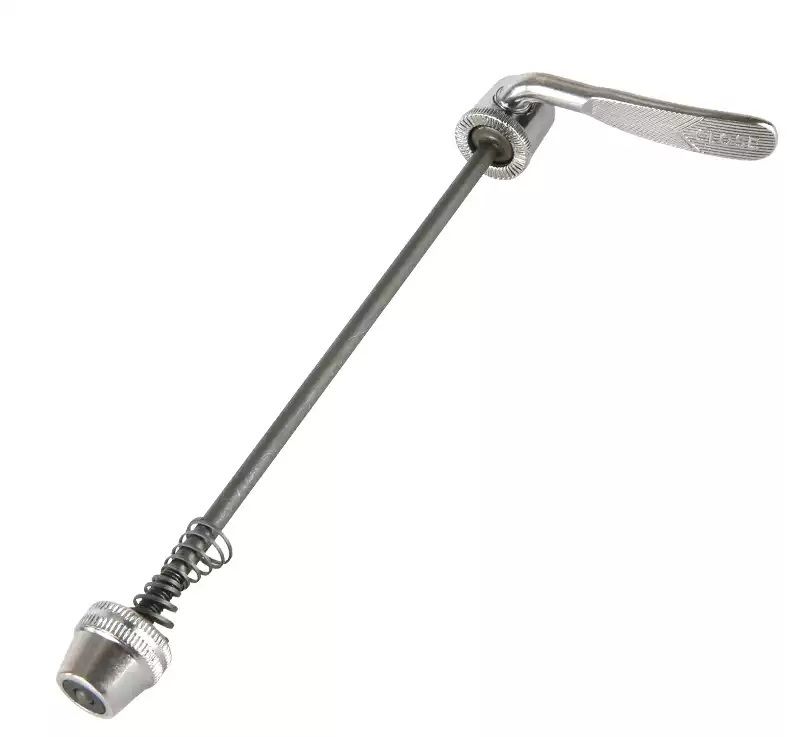
The Bike Trainer Tips 01: Dedicated Quick-Release Skewer
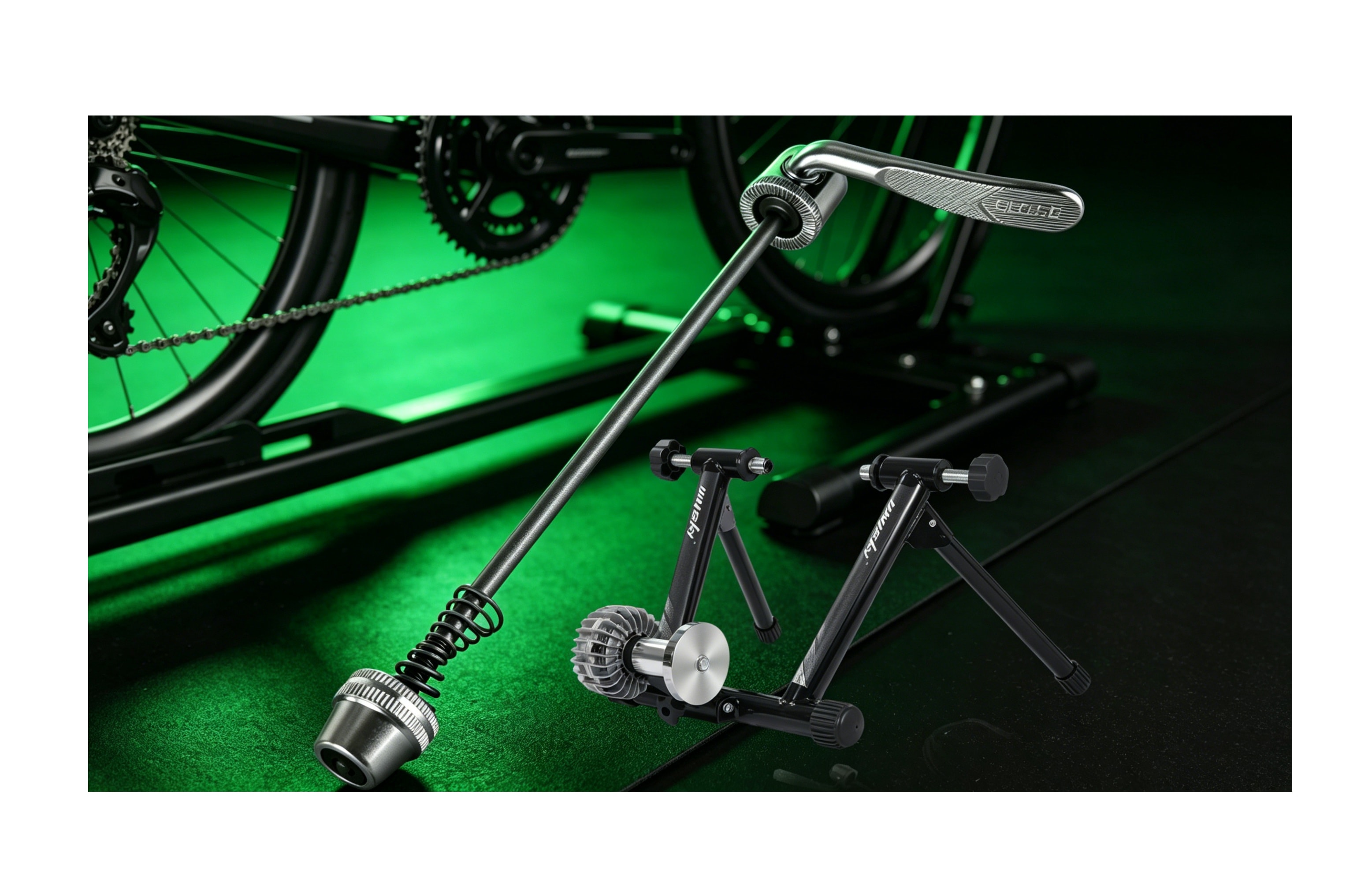
Why Must You Use a Dedicated Quick-Release Skewer with a Bike Trainer?
Many cyclists who are new to using bike trainers encounter the same question: "I already have a quick-release skewer at home—why do manufacturers insist that I must use a skewer specifically designed for bike trainers?"
Standard Quick-Release Skewers Are Not "Universal Parts"
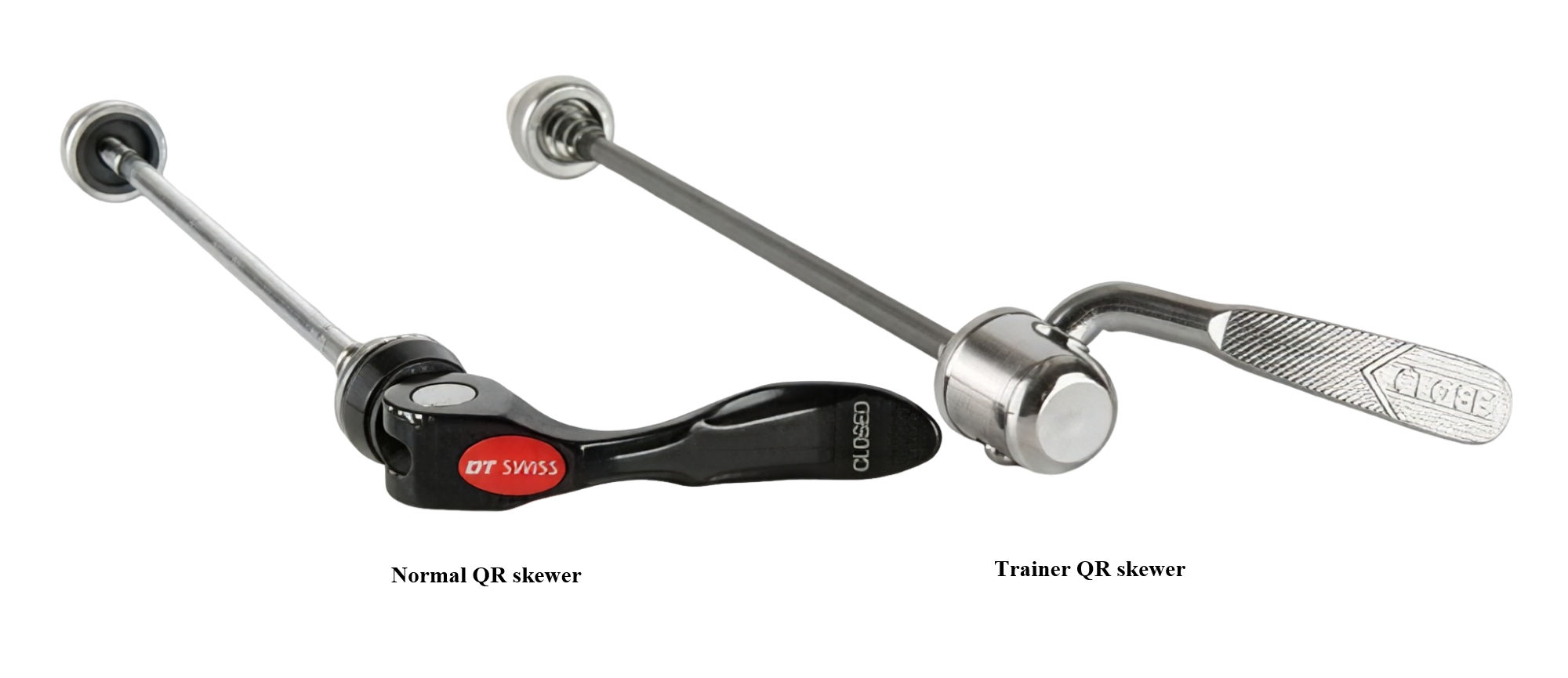
The sole purpose behind the original design of a standard quick-release skewer was this: to secure the wheel to the bike frame while allowing for easy installation and removal. Its load-bearing mechanics, locking interface, and thread specifications are all optimized specifically for interaction with the bike's frame/fork dropouts.
Bike trainers, however, operate on a completely different principle:
- The rear wheel is suspended in the air, concentrating the entire weight of the bicycle onto the interface between the rear axle and the trainer's roller.
- When pedaling with force, the chain, cassette, and rear axle are subjected to continuous, dynamic torsional forces.
- This is especially true during high-power output scenarios—such as standing sprints or "rocking" the bike—where the applied forces can instantly multiply in magnitude.
What Are the Risks of Using a Standard Quick-Release Skewer on a Bike Trainer?
1. Improper Contact Points: Prone to Loosening or Slipping Out
The locking surface of a standard quick-release skewer is designed to mate specifically with the dropouts of a bicycle frame. When used on a bike trainer, this contact interface often fails to align correctly, leading to the following issues:
- The clamping force cannot be transmitted effectively;
- Minor loosening may occur after prolonged periods of pedaling;
- In extreme cases, the rear wheel—or the hub itself—may suddenly dislodge during a training session.
2. Material and Structural Strength: May Not Withstand "Long-Term Abuse"
Most standard quick-release skewers are constructed from steel or lower-grade aluminum alloys:
- Steel: Heavy and prone to rust; its lifespan is significantly reduced in humid environments (such as during intense indoor training sessions in winter, where heavy sweating occurs).
- Low-Grade Aluminum: While certainly lightweight, it often lacks sufficient tensile and fatigue strength; prolonged use carries a significant risk of structural failure or breakage.
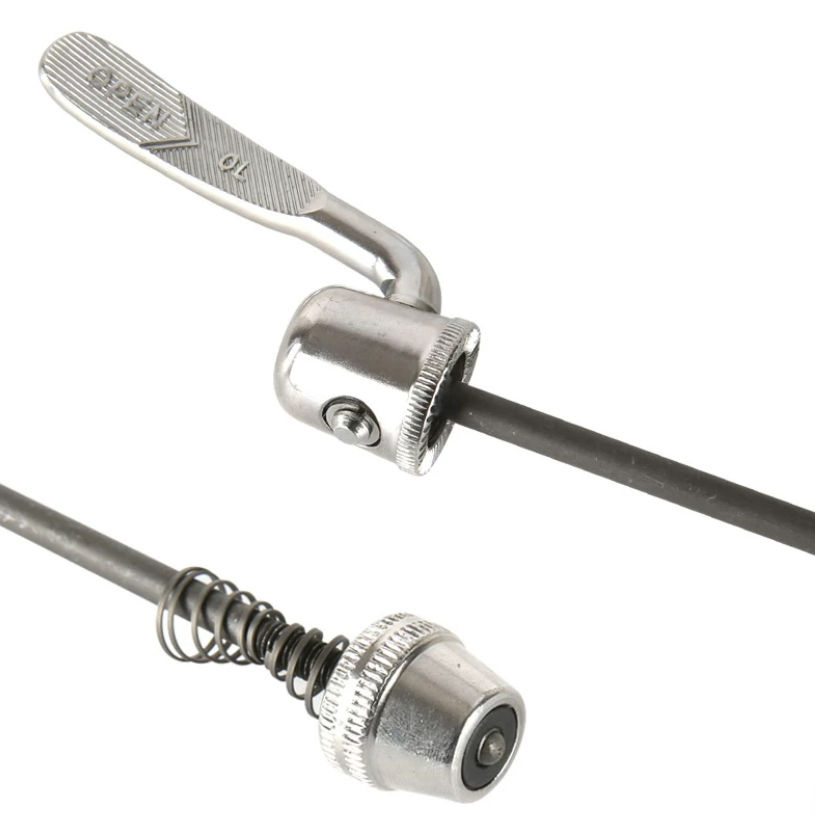
Quick-release skewers designed specifically for bike trainers typically feature the following characteristics:
- They are crafted from high-grade steel, ensuring exceptional strength while simultaneously minimizing weight;
- Their surfaces are treated to resist corrosion and sweat—making them ideally suited for the indoor training environment.
What Exactly Makes These Specialized Quick-Release Skewers "Special"?
Do not underestimate this unassuming little rod; its design has undergone targeted optimization:
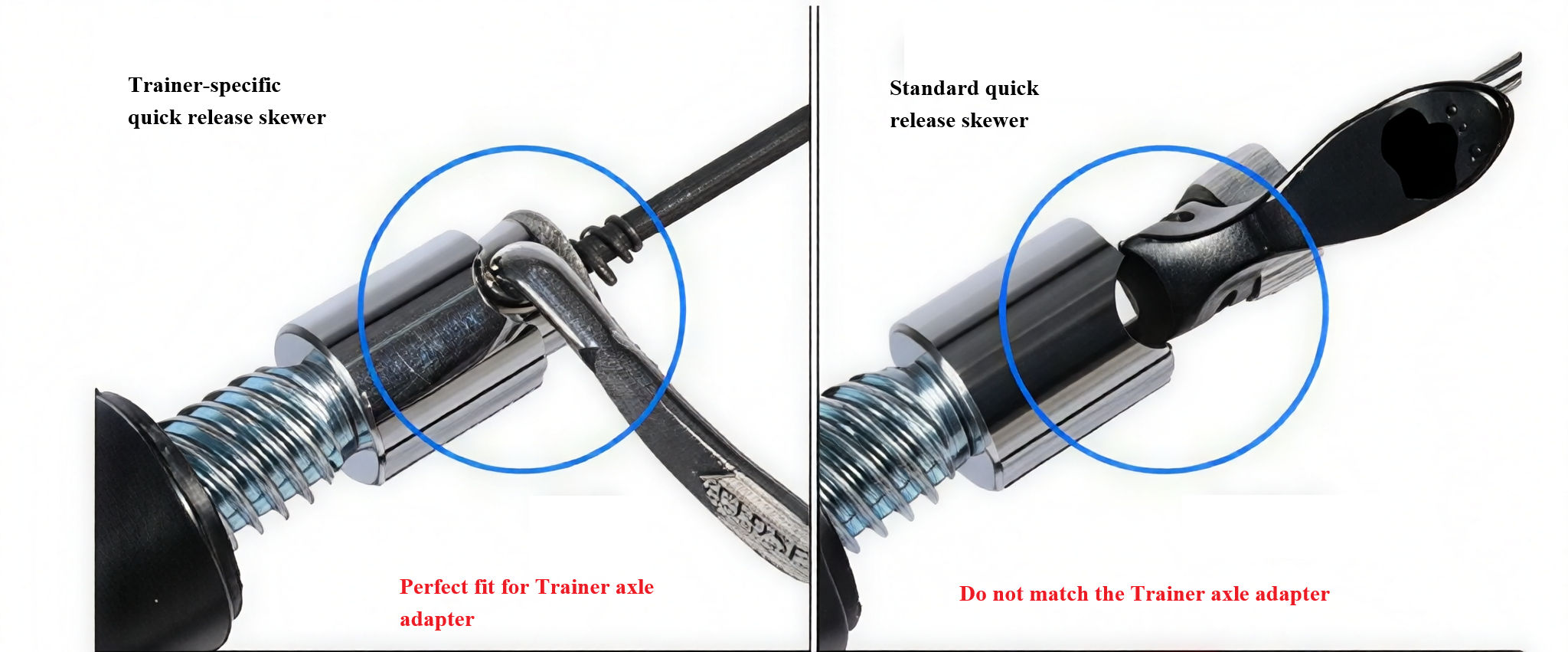
1. Redesigned Load-Bearing Surfaces Optimized for Trainer Structures
The specialized quick-release skewer features:
- A cam angle, clamping washer shape, and contact surface area that are precisely matched to the structure of the trainer's mounting cradle.
- This ensures that the clamping force is applied exactly where it is needed, preventing the skewer from loosening during use.
2. Standardized and Calibrated Thread Specifications
Quick-release skewers from reputable brands feature thread specifications that are strictly calibrated to match their specific equipment, ensuring:
- Smooth, snag-free threading;
- Sufficient thread engagement depth for even load distribution;
- Resistance to thread damage, even after repeated installation and removal.
Using a Dedicated Quick-Release Skewer Is Strongly Suggested
✅ All bike trainers we sell come equipped with a specialized quick-release skewer.
Upon receiving your product, please replace your bicycle's original quick-release skewer with the one we have provided to ensure a superior and safer indoor cycling experience.